
Hyros is an ad tracking and attribution platform that shows you which ads actually generate sales, calls, and leads, even when ad platforms like Meta and Google under-report or miss those conversions. It’s built mainly for marketers running paid ads on longer or higher-value sales funnels, such as coaching, info products, high-ticket offers, and e-commerce.
If you’ve ever looked at your Facebook Ads dashboard and your bank account and wondered why the numbers don’t match, this guide explains what Hyros is, how it works, what it costs, and who it’s really for.
What Is Hyros?
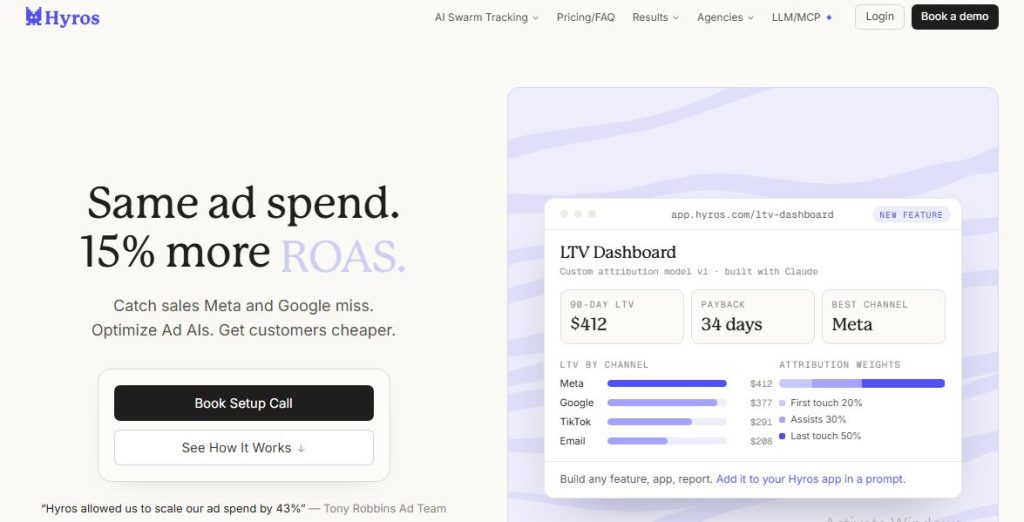
Hyros is a cloud-based ad attribution and AI optimization tool. Instead of relying only on the pixels and reports from ad platforms, it collects its own first-party data and connects each sale back to the ad that started the customer journey. It then sends that improved conversion data back to platforms like Facebook and Google so their algorithms can target better.
In short: Hyros helps you see which ads really make you money, and helps ad platforms learn from better data analysis.
Read Hyros Review | Visit website
Why Do Advertisers Use Hyros?
Ad tracking got harder after iOS privacy changes and cookie restrictions. Pixel-based tracking often misses conversions, especially when a customer clicks an ad on their phone and buys later on a laptop. That leads to bad decisions, like cutting an ad that was actually working or scaling one that only looked good.
Hyros was built to close that gap, particularly for businesses with longer sales cycles where the buyer takes days or weeks to convert.
How Does Hyros Work?
Hyros uses a tracking approach it calls “print tracking.” Here’s the simple version:
- You install the Hyros tracking script on your website and connect your ad accounts.
- Each visitor builds a “print,” a collection of data points about them, so Hyros can recognize them across sessions and devices.
- When that person converts (buys, books a call, subscribes), Hyros matches the conversion back to the original print and the ad that brought them in.
- Hyros sends this data back to ad platforms to improve their targeting.
Hyros also typically requires a setup call, and your account is customized to your business model and tools.
Key Features
- Print tracking and cross-device attribution: Hyros can track customers across different devices and connect their activity to the marketing campaigns that influenced them. This is useful when someone first sees an ad on their phone but later returns on a laptop or desktop to make a purchase.
- Call tracking: Hyros connects phone conversions back to the marketing campaigns that helped generate them. This gives businesses a clearer picture of which ads, keywords, or customer journeys are producing revenue through phone calls.
- Multi-touch customer journey reporting: Hyros shows the different marketing touchpoints a customer interacted with before making a purchase. Instead of giving all the credit to the final click, you can see how multiple ads, emails, and other interactions contributed to the conversion.
- AI optimization data feed: Hyros can send more useful conversion data back to advertising platforms to help improve campaign optimization. The goal is to give ad platforms better revenue and customer data instead of relying only on basic conversion events.
- Lifetime value and forecasting: Hyros helps businesses look beyond the first purchase by connecting advertising activity with longer-term customer value. This can make it easier to see which campaigns are attracting customers who generate more revenue over time.
- Integrations: Hyros connects with major advertising platforms, funnel builders, CRMs, and payment tools. These connections allow customer and conversion data to move between the systems a business already uses.
- Hyros AIR (AI Remarketing): Hyros AIR is a separate AI-powered product designed to automate parts of the remarketing process. It is offered separately from the core Hyros tracking plans, so businesses should treat it as an additional product rather than a standard tracking feature.
- Revenue attribution: Hyros connects marketing activity to actual revenue so businesses can see which campaigns are generating sales rather than simply clicks or leads. This can be especially useful for companies with longer sales cycles where a customer may interact with several marketing channels before buying.
- Lead and customer tracking: Hyros can organize marketing and customer data around individual leads and customers, helping businesses follow how prospects move through the sales process. This gives marketers more context when analyzing which campaigns are attracting and converting valuable customers.
- Marketing performance dashboards: Hyros provides reporting tools that bring marketing and revenue data together in one place. Instead of checking several advertising and sales platforms separately, marketers can use the reporting to get a broader view of campaign performance.
Hyros Pricing
Hyros pricing is revenue-based, meaning your price depends on how much revenue Hyros tracks for you each month, not on your ad spend. As you track more revenue, you move into a higher pricing bracket.
Hyros pricing starts at $69 per month for up to $5,000 in tracked monthly revenue.
Higher revenue brackets cost more, and businesses with larger tracked revenue or agency needs may need to book a demo for a custom quote. Hyros AIR is priced separately from the core tracking plans.
See the full breakdown on our dedicated page: Hyros Pricing post.
Pricing can change, so confirm current rates on the Hyros website before you buy.
Who Should Use Hyros?
Hyros is a good fit if you:
- Run paid ads regularly and want more accurate attribution than platform reports give you
- Sell coaching, consulting, courses, high-ticket offers, or products with longer sales cycles
- Have phone calls or multi-step funnels that are hard to track with a simple pixel
- Want to feed better data back to Meta or Google to improve ad performance
Who Might Not Need Hyros?
Hyros may be more than you need if you:
- Are just starting out with very small ad budgets and simple funnels
- Only need basic click and conversion tracking
- Sell purely e-commerce products and prefer a tool built specifically for online stores
- Don’t want a guided onboarding or setup process
Hyros Pros and Cons
Pros
- Attribution built for long sales cycles and cross-device journeys
- Call tracking and customer journey reporting in one platform
- Sends better conversion data back to ad platforms
- Guided setup and support
Cons
- Revenue-based pricing means your cost grows as you grow
- Setup is more involved than dropping in a simple pixel
- Some features, like AIR, cost extra
- May be overkill for beginners
Hyros Alternatives
If Hyros isn’t the right fit, here are other tools to consider:
| Tool | Best for |
|---|---|
| Voluum | Affiliate marketers and media buyers who want a wide traffic-source library |
| RedTrack | Budget-conscious marketers who want e-commerce attribution and AI features |
| ClickMagick | Simpler click tracking and link management |
| Triple Whale | E-commerce brands, especially Shopify stores |
| SegMetrics | Funnel analytics and lifetime value tracking at a lower cost |
Weighing Voluum against RedTrack? Read our full comparison: Voluum vs RedTrack
Frequently Asked Questions
What is Hyros used for? Hyros is used to track which ads drive sales, calls, and leads, and to send that data back to ad platforms to improve targeting.
How much does Hyros cost? Hyros pricing is revenue-based and starts at $69 per month for up to $5,000 in tracked monthly revenue. See our Hyros pricing page for details.
Is Hyros worth it? It can be, if you run paid ads with enough revenue that better attribution changes your decisions. For very small budgets or simple funnels, a lighter tool may be enough.
Does Hyros work with Shopify? Yes, Hyros offers Shopify support. Check the Hyros site for the current integration details and plans.
How is Hyros different from Google Analytics? Google Analytics reports on website behavior. Hyros focuses on tying revenue back to the specific ads that produced it, including across devices and over longer sales cycles.
Does Hyros offer a free trial? Sources conflict on this, so check the Hyros website for the current trial and demo options.
Final Verdict
Hyros is a strong attribution tool for advertisers who sell higher-value offers or run longer funnels and are tired of platform reports that don’t match real revenue. With pricing starting at $69 per month for up to $5,000 in tracked monthly revenue, the entry point is approachable, though costs rise as your tracked revenue grows.
If you’re just starting out or only need basic tracking, a simpler tool may serve you better. If you’re scaling paid ads and want to know exactly what’s working, Hyros is worth a close look.
Ready to check current plans? See our Hyros pricing breakdown.
Features and pricing are subject to change. Always verify details on the official Hyros website before purchasing.