
If you’re looking for an in-depth Hyros review, you’ve come to the right place. In today’s competitive digital marketing world, tracking the effectiveness of your campaigns is crucial to optimizing ad spend and maximizing ROI.
Whether you’re running Facebook ads, Google Ads, or email marketing campaigns, the ability to understand which ads are working and why is essential for business growth. Hyros is a sophisticated tracking tool designed to give marketers an edge by providing detailed, real-time insights into campaign performance. It offers precise tracking and advanced attribution across multiple platforms, enabling businesses to make data-driven decisions with confidence.
This review dives deep into the features of Hyros, its pros and cons, who it’s best suited for, and how it compares to other tracking solutions on the market.
Quick Summary
- Hyros is an advanced marketing tracking and attribution platform built to give businesses a clearer picture of how their marketing channels contribute to revenue.
- It integrates data from Google, Meta, YouTube, email, phone calls, and offline campaigns into a broader view of the customer journey.
- One of its biggest strengths is multi-channel attribution, helping marketers look beyond the numbers reported by individual advertising platforms and understand how different touchpoints work together.
- Key features include automated attribution, real-time analytics, customizable reporting, Print Tracking, Email Tracking, and Calls Tracking.
- Hyros is particularly useful for advertisers, agencies, media buyers, info marketers, and businesses running complex multi-platform campaigns where native Google or Meta attribution alone may not provide the full picture.
- Hyros pricing starts at $69/month and is based on tracked monthly revenue. Every feature is included, along with a setup team and an AI analyst. There is no free trial.
- Businesses spending $25,000 or more per month on advertising are more likely to have enough campaign volume and data to benefit from advanced attribution, while smaller businesses may find simpler tracking tools sufficient.
What is Hyros?
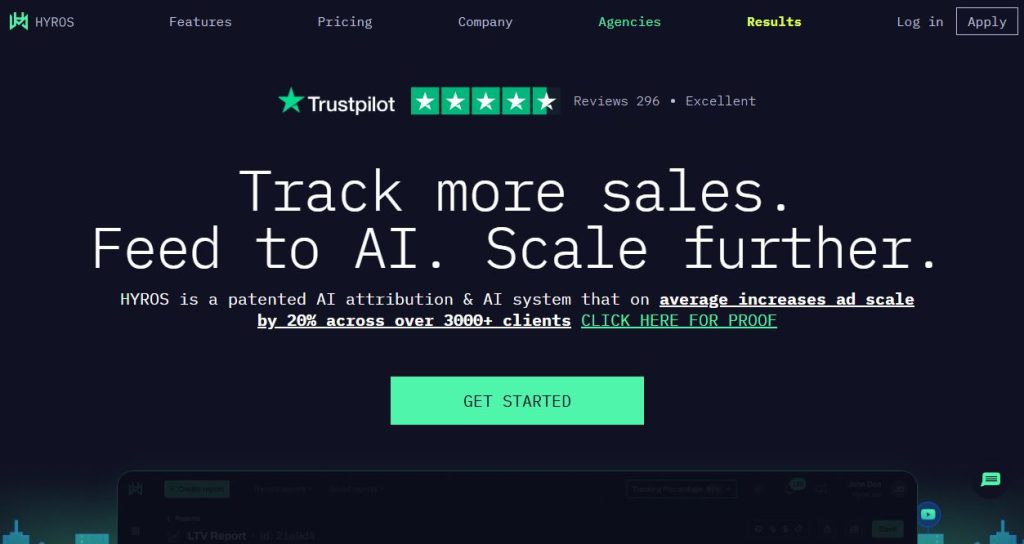
Hyros is a cutting-edge marketing tracking platform that allows businesses to track and optimize their advertising efforts across multiple channels. Unlike traditional tracking tools that often offer limited insights, Hyros provides marketers with in-depth, real-time analytics that spans from digital ads to offline campaigns.
The primary goal of Hyros is to help marketers understand how each aspect of their campaign contributes to conversions, making it possible to optimize ad spend effectively and increase ROI. It achieves this through automated attribution, which ensures that businesses can accurately track the customer journey and assign credit to the right touchpoints.
The platform is particularly useful for businesses running large-scale campaigns that span across various channels, such as Google Ads, Facebook Ads, YouTube, and even email or print marketing.
How Does Hyros Work?
Hyros works by collecting and analyzing data from every interaction a user has with your brand. Whether they click on an ad, open an email, or visit your website, Hyros ensures that you have a full picture of the customer’s journey.
One of Hyros’ standout features is its multi-channel tracking, which aggregates data from all your ad platforms into a single dashboard. This means you don’t need to switch between various tools or platforms to get a complete view of your ad performance. Hyros also tracks phone calls, email interactions, and even offline print ads, ensuring that all marketing efforts are tracked in one unified system.
The tool provides advanced automated attribution, meaning it automatically assigns credit for conversions to the correct source, whether it’s an ad click, a print ad, or a phone call. This automation saves time and ensures that attribution is both accurate and scalable across campaigns.
Hyros Key Features
Multi-Channel Tracking
Hyros provides in-depth tracking for multiple platforms, including Google Ads, Facebook Ads, YouTube, and other digital marketing channels. What sets it apart is its ability to consolidate all this data into one unified dashboard, allowing you to see the full picture of how your ads are performing across all platforms. This feature is particularly beneficial for businesses managing several campaigns simultaneously, as it simplifies performance tracking.
Automated Attribution
One of the biggest challenges for marketers is attribution—knowing which ads or touchpoints are responsible for conversions. Hyros automates this process, offering advanced attribution that accurately ties each conversion to the right ad campaign or platform. This means that businesses can make smarter decisions about where to allocate their marketing budget.
Real-Time Analytics
Real-time analytics give businesses the ability to track their ad performance as it happens. Hyros provides actionable insights that allow marketers to adjust their campaigns on the fly. This is a valuable feature for businesses that need to make quick changes to optimize their spending or target specific customer segments more effectively.
Customizable Dashboards
With Hyros, you can create dashboards that are tailored to your business’s specific needs. Whether you want to track performance by ad campaign, customer demographics, or traffic source, Hyros makes it easy to customize your reports and dashboards to ensure you’re always tracking the most important metrics.
Advanced Reporting Features
Hyros provides robust reporting options, including detailed reports that break down ROI, customer lifetime value, and campaign performance by platform. These reports can be customized to focus on the most relevant metrics for your business, giving you an edge in optimizing your campaigns and budget allocation.
Print Tracking
Hyros also offers Print Tracking, a feature that allows businesses to track the performance of their print ads, such as flyers, brochures, and posters. By assigning unique phone numbers or tracking links to each print campaign, Hyros captures data on how these offline ads are driving customer engagement and conversions. This is particularly useful for businesses that integrate both offline and online marketing strategies, giving them a complete picture of their marketing performance.
Email and Calls Tracking
In addition to digital ads, Hyros enables tracking for Email and Calls. If your business runs email marketing campaigns or relies on phone calls to close sales, Hyros can track these interactions as part of your overall marketing efforts. It captures data on which emails lead to conversions and tracks the performance of inbound phone calls. This ensures that every marketing channel—digital and offline—is accounted for and provides actionable insights to improve future campaigns.
Hyros Pricing
How Much Does Hyros Cost?
Hyros has one plan, and the price is based on the amount of revenue you track each month. You don’t have to choose between different feature packages because every Hyros feature is included in the plan.
The monthly price increases as the amount of tracked revenue increases:
| Tracked Monthly Revenue | Monthly Price |
|---|---|
| Up to $5,000 | $69/month |
| Up to $10,000 | $129/month |
| Up to $20,000 | $230/month |
| Up to $40,000 | $353/month |
| Up to $83,000 | $583/month |
| Up to $250,000 | $999/month |
| Up to $750,000 | $1,499/month |
| $1 million+ | Custom quote |
So, for example, a business tracking up to $40,000 in monthly revenue would pay $353 per month, while a business tracking up to $250,000 would pay $999 per month.
Every feature is included, regardless of the tier. Hyros also includes a setup team to help get your tracking in place, along with an AI analyst that can help you understand your marketing data.
There is no free trial.
What Do You Get With Hyros?
Unlike software that separates features across several packages, Hyros includes its full feature set within the revenue-based pricing structure. That includes its attribution and tracking capabilities, reporting tools, and support features.
The main thing that determines your price is how much monthly revenue you track, not whether you need a specific feature.
Is Hyros Expensive?
Hyros can become a significant monthly expense as your tracked revenue increases. The $69 starting price is relatively accessible, but businesses tracking $250,000 or more in monthly revenue can pay $999 or more each month.
That pricing makes more sense for advertisers and businesses where better attribution can have a meaningful impact on a much larger advertising budget.
For a smaller business spending only a few thousand dollars per month on advertising, paying hundreds of dollars every month for advanced attribution may be harder to justify.
There is also no free trial, so businesses should understand the pricing structure and make sure the platform fits their tracking needs before signing up.
Hyros Pros & Cons
Hyros Pros
- Multi-channel attribution gives you a broader view of how different marketing touchpoints contribute to revenue.
- Strong call attribution helps coaching and consulting businesses connect phone calls to their marketing campaigns and sales.
- Cross-platform tracking lets you track performance across Google, Meta, YouTube, email, and other channels.
- Better customer journey tracking helps you understand how prospects move from the first interaction to conversion.
- Advanced revenue attribution helps you see which campaigns and channels are actually contributing to sales.
- Real-time reporting gives marketers faster insights into campaign performance and marketing results.
- Offline tracking lets you measure marketing activities such as print campaigns and phone calls alongside digital campaigns.
Hyros Cons
- Higher cost can make Hyros difficult to justify for businesses with limited budgets.
- No free trial means you can’t test the platform for free before committing to a paid plan.
- More features than some businesses need can make Hyros unnecessary for simple campaigns.
- Requires enough marketing data to get the most value from its advanced attribution and reporting.
Who Should Use Hyros?
Hyros is primarily designed for advertisers, media buyers, performance marketers, and businesses that have enough advertising volume to benefit from advanced attribution.
A practical starting point is businesses spending $25,000 or more per month on advertising. At this level, even a small improvement in how you allocate your ad budget can represent a meaningful amount of money.
Hyros can be particularly relevant for:
Advertisers spending $25,000+ per month: When you’re putting tens of thousands of dollars into paid traffic every month, knowing which campaigns, ads, and channels are actually producing revenue becomes much more important.
Media buyers: If you manage campaigns across Google, Meta, YouTube, and other channels, Hyros can give you another layer of attribution data to analyze alongside the native reporting from each advertising platform.
Performance marketers: Marketers focused heavily on revenue, customer acquisition costs, return on ad spend, and attribution can use Hyros to bring data from multiple marketing channels together.
Businesses with complex customer journeys: Hyros can be useful when customers interact with several marketing touchpoints before buying, particularly when email, phone calls, paid advertising, and other channels all play a role.
Businesses with high-value customers: If one customer is worth thousands of dollars or more, having a clearer view of the marketing touchpoints that contribute to that sale can be valuable.
The key question isn’t simply whether you run ads. It’s whether you have enough marketing volume and revenue for more detailed attribution to justify another software expense.
Who Shouldn’t Use Hyros?
Hyros isn’t necessarily a good fit for every advertiser.
If you’re a small business spending less than $25,000 per month on advertising, you may not have enough advertising volume to get full value from an advanced attribution platform.
Hyros may also be unnecessary if you:
- Run only a small number of advertising campaigns.
- Have a simple customer journey.
- Don’t spend enough on advertising to make advanced attribution financially meaningful.
- Mainly rely on one advertising platform.
- Don’t need detailed multi-channel attribution.
- Are looking for a free trial before committing to a tracking platform.
That doesn’t mean smaller businesses can’t use Hyros. It simply means the cost and complexity should be weighed against the amount of marketing data you’re actually generating.
Hyros vs. Other Tracking Tools
When comparing Hyros with other tracking platforms, it’s important to look at what type of attribution you need. A tool built for advanced multi-channel attribution solves a different problem from a basic link tracker or the attribution reports inside an advertising platform.
Hyros vs. ClickMagick
ClickMagick is primarily focused on link tracking, conversion tracking, split testing, and related campaign tracking features. It can be a practical option for marketers who need straightforward tracking without the broader attribution approach of Hyros.
Hyros is aimed at a different use case. It brings together data from multiple marketing channels and is designed for businesses that want deeper attribution and customer-journey insights.
The biggest difference is complexity and intended use. ClickMagick can make more sense for simpler tracking needs, while Hyros is built around more extensive marketing attribution.
Hyros vs. Voluum
Voluum is a tracking and analytics platform commonly used for paid traffic, PPC, affiliate marketing, and campaign optimization. It provides tools for tracking visits, conversions, and campaign performance.
Hyros focuses more heavily on connecting marketing interactions to revenue and attribution across multiple channels, including channels outside traditional paid traffic.
For advertisers running complex campaigns across several platforms and marketing channels, the main point of comparison is how much attribution depth they actually need.
Hyros vs. Triple Whale
Triple Whale is heavily focused on eCommerce analytics and is particularly associated with brands that sell products online. It brings together information about advertising, sales, customers, and store performance.
Hyros has a broader marketing attribution focus and can be relevant to businesses beyond traditional eCommerce, including businesses where calls, email, and other customer interactions play an important role.
For an eCommerce brand, the choice depends heavily on whether the business primarily needs store and profitability analytics or deeper cross-channel marketing attribution.
Hyros vs. Native Platform Attribution
Hyros can also be compared directly with the attribution systems built into advertising platforms such as Google Ads and Meta Ads.
Google and Meta already provide advertisers with attribution and conversion reporting inside their respective platforms. These native tools are useful because they are built directly into the advertising platforms where campaigns are created and optimized.
The main difference is that native platform attribution generally gives you a platform-specific view of performance, while Hyros is designed to bring data from multiple marketing channels together.
| Feature | Hyros | Google Ads Attribution | Meta Attribution |
|---|---|---|---|
| Multi-channel attribution | Yes | Primarily Google ecosystem | Primarily Meta ecosystem |
| Google Ads data | Yes | Yes | No |
| Meta Ads data | Yes | No | Yes |
| Cross-channel view | Yes | Limited to Google’s view | Limited to Meta’s view |
| Email tracking | Yes | Limited | Limited |
| Call tracking | Yes | Limited | Limited |
| Offline marketing tracking | Yes | Limited | Limited |
| Native campaign optimization | No, works alongside ad platforms | Yes | Yes |
| Revenue-focused attribution | Yes | Yes, based on available conversion data | Yes, based on available conversion data |
| Best suited to | Businesses needing broader attribution | Advertisers focused on Google | Advertisers focused on Meta |
One important point: Hyros doesn’t replace Google Ads or Meta Ads. You still use those platforms to create, manage, and optimize your campaigns. Hyros sits alongside them as an additional attribution and tracking layer.
This can be useful for advertisers spending $25,000+ per month who don’t want to rely solely on one advertising platform’s view of their marketing performance.
Comparison Takeaways
ClickMagick, Voluum, Triple Whale, Google Ads, Meta Ads, and Hyros all approach tracking from different angles.
ClickMagick is focused more on straightforward campaign and link tracking. Voluum is built around traffic and campaign tracking. Triple Whale is strongly focused on eCommerce analytics. Google Ads and Meta provide native attribution within their own advertising platforms.
Hyros is aimed at businesses that want a broader view of marketing attribution across multiple channels.
The right option depends on the amount you’re spending, the number of channels you’re using, and how complex your customer journey is. For businesses spending less than $25,000 per month on advertising, the native attribution tools available from Google and Meta may provide enough information. For larger advertisers with multiple channels and more complex customer journeys, a dedicated attribution platform can provide additional data to work with.
Related Post: 7 Best Hyros Alternatives for Accurate Ad Tracking & Attribution
How to Get Started with Hyros
Getting started with Hyros involves several key steps to integrate the platform with your ad accounts and website. Here’s a step-by-step guide to help you get up and running:
Step 1: Sign Up for Hyros
To start, visit the Hyros website and sign up for an account. Since pricing is custom, you’ll need to provide some basic information about your business and your campaign volume, and you may have to get in touch with a sales representative to finalize your plan.
Step 2: Integrate Your Ad Accounts
Once you’ve created an account, the next step is to integrate your ad platforms (such as Facebook Ads, Google Ads, and YouTube). Hyros supports integration with a wide range of platforms, allowing you to consolidate data from all your marketing efforts in one dashboard. This integration ensures that all your campaign data is being tracked and recorded accurately.
Step 3: Install the Hyros Tracking Code
After connecting your ad platforms, you’ll need to install the Hyros tracking code on your website. This is essential for tracking user behavior as they interact with your ads and your website. Hyros provides clear instructions on how to do this, making the setup process fairly simple.
Step 4: Set Up Campaign Tracking
Once the tracking code is installed, you’ll configure your campaigns within the Hyros platform. This involves creating custom parameters for each of your ads so that Hyros can accurately attribute conversions to the right ad source. You can also set up email marketing campaigns and phone tracking to ensure all channels are accounted for.
Step 5: Start Analyzing Your Data
After setting up your campaigns and integrations, you can begin to analyze your marketing data. Hyros provides a real-time, user-friendly dashboard where you can monitor performance and make adjustments as needed. The customizable reports allow you to focus on the metrics that matter most to your business, from ROI to customer lifetime value (CLV).
Step 6: Optimize Your Campaigns
With the data in hand, you can start optimizing your campaigns. Hyros gives you the insights needed to understand which ads and channels are driving the most conversions, so you can allocate your budget effectively. Whether you need to increase spending on high-performing ads or cut back on underperforming ones, Hyros makes the process easy.
Final Thoughts on Hyros
Hyros is built for marketers who need to understand more than just clicks and conversions.
Its biggest strength is the depth of tracking and attribution it brings to multi-channel marketing. Instead of looking at each advertising platform in isolation, Hyros can help connect the dots between paid ads, email, phone calls, print campaigns, and other customer touchpoints. That broader view can be especially useful when a customer interacts with several marketing channels before making a purchase.
For advertisers, agencies, media buyers, and info marketers spending $25,000 or more per month on advertising, this level of insight can be valuable. When you’re managing a significant ad budget across Google, Meta, YouTube, and other channels, understanding how those channels contribute to revenue can help you spot opportunities that aren’t always obvious from native platform reporting alone.
Hyros also goes beyond basic tracking. Its attribution tools, reporting, real-time insights, setup team, and AI analyst are designed to help businesses turn large amounts of marketing data into something they can actually use.
That said, Hyros isn’t designed for everyone. The platform can take time to learn, and its advanced features may be unnecessary if you’re running simple campaigns or don’t have enough marketing data to benefit from deeper attribution. Smaller advertisers spending less than $25,000 per month may find that the native reporting available through Google, Meta, and other platforms gives them everything they need.
Pricing is another factor to consider. Hyros starts at $69 per month for up to $5,000 in tracked monthly revenue and goes up to $1,499 per month for up to $750,000, with custom pricing for businesses tracking $1 million or more. Every feature is included, along with a setup team and an AI analyst, but there is no free trial.
If you’re running multi-platform campaigns, spending heavily on paid traffic, and dealing with customer journeys that involve several touchpoints, Hyros gives you a powerful way to bring that data together. If your campaigns are smaller or simpler, you may not need that additional layer of tracking yet.
Hyros can be a powerful marketing intelligence and attribution platform—not because it replaces Google or Meta, but because it can give marketers another perspective on what’s happening across their entire customer journey.
Frequently Asked Questions About Hyros
Is Hyros Worth the Price?
Hyros can be worth the price for businesses that need deeper attribution than what they get from individual advertising platforms. Its value comes from connecting marketing data across channels and helping you understand which campaigns and customer touchpoints are contributing to revenue.
It can be especially useful for advertisers, media buyers, agencies, and performance marketers running complex campaigns across multiple platforms. Businesses spending $25,000 or more per month on advertising are more likely to have enough marketing volume for advanced attribution to make a meaningful difference.
How Much Does Hyros Cost?
Hyros has one plan, with pricing based on tracked monthly revenue. The current pricing structure starts at $69 per month for up to $5,000 in tracked monthly revenue and increases as tracked revenue grows.
The pricing tiers are:
- Up to $5,000: $69/month
- Up to $10,000: $129/month
- Up to $20,000: $230/month
- Up to $40,000: $353/month
- Up to $83,000: $583/month
- Up to $250,000: $999/month
- Up to $750,000: $1,499/month
- $1 million+: Custom pricing
Every feature is included in the plan, along with a setup team and an AI analyst. There is no free trial.
Is Hyros Better Than Triple Whale?
Hyros and Triple Whale are both designed to help businesses understand marketing performance, but they focus on somewhat different needs.
Triple Whale is heavily focused on eCommerce analytics, profitability, and store performance, while Hyros places a strong emphasis on attribution and tracking across multiple marketing channels.
Hyros can be a strong fit for businesses that need detailed attribution across paid advertising, email, calls, and other customer touchpoints. Triple Whale may be a better fit for an eCommerce brand looking for a broader store analytics and profitability platform.
What Does Hyros Do That Native Google and Meta Attribution Don’t?
Hyros is designed to bring data from multiple channels together. It can track interactions across advertising platforms, email, phone calls, and other parts of the customer journey, giving marketers another view of how those touchpoints contribute to revenue.
Hyros can also feed conversion data back to advertising platforms, allowing marketers to use the additional tracking data alongside their existing Google and Meta campaigns.
The key difference is that Google and Meta show you their view of your advertising performance, while Hyros is designed to give you a broader attribution view across your marketing operation.
Is Hyros Setup Difficult?
No. Hyros setup requires connecting your advertising accounts, website, sales systems, and other relevant marketing tools so the platform can collect and match your data.
The good news is that Hyros provides a setup team to help with the process, and its documentation includes setup guides for platforms such as Shopify, Google Ads, Facebook Ads, and other integrations. Hyros also offers one-click integrations with several popular business tools.
What Are the Best Hyros Alternatives?
The best Hyros alternative depends on what you want to track.
ClickMagick is worth considering if you primarily need straightforward link, campaign, and conversion tracking.
Voluum is another option for marketers focused heavily on paid traffic, PPC, and campaign tracking.
Triple Whale is particularly relevant to eCommerce brands that want attribution alongside store analytics, profitability data, and other eCommerce reporting.
Does Hyros Work for Ecommerce?
Yes. Hyros supports eCommerce businesses and integrates with platforms such as Shopify and WooCommerce, along with other eCommerce, advertising, email, CRM, and checkout tools.
For eCommerce businesses, Hyros can track the customer journey from an ad interaction through to purchases and other revenue events. It can also connect with tools such as Shopify, WooCommerce, Klaviyo, and various advertising platforms.
Who Founded Hyros?
Hyros was founded by Alex Becker, who is also listed by Hyros as its founder and CEO. Hyros says Becker built the company after experiencing the difficulty of accurately tracking marketing performance across his own business.
The company was founded around the goal of giving businesses more detailed marketing and revenue attribution data rather than relying solely on the reporting provided by individual advertising platforms.