
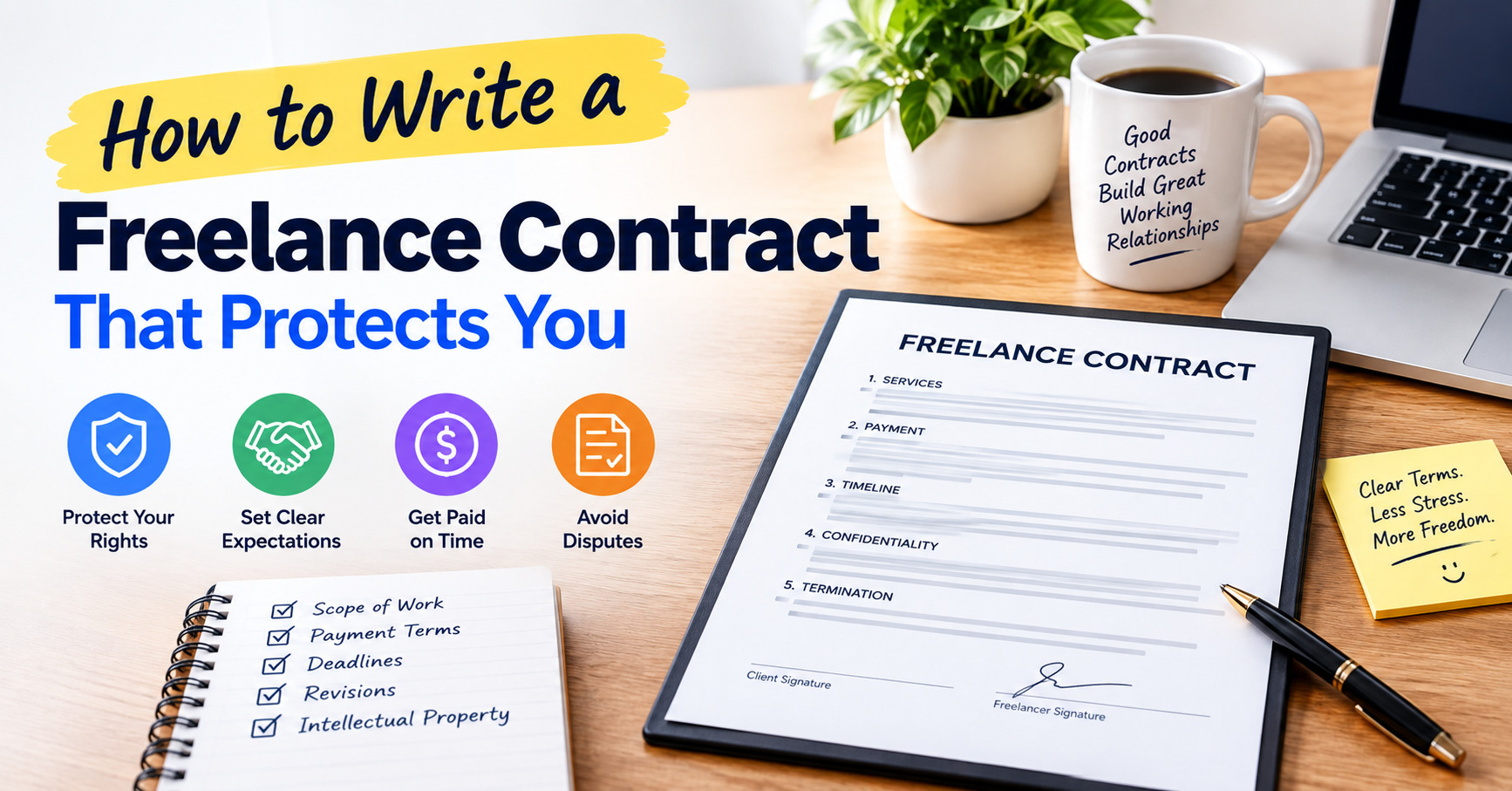
You land a new client. The project sounds exciting, the budget is decent, and you’re eager to get started. So you do — no contract, just a quick email exchange and a handshake (virtual or otherwise). Three weeks later, the client wants “just one more small revision.” Then another. Then they ask for a whole extra feature that was never discussed, still expecting it to fall under the original price. When you finally send the invoice, they go quiet for two weeks before offering to pay half.
Sound familiar? This is one of the most common ways freelance projects go sideways — and nearly all of it is preventable with a single document: a freelance contract.
A good contract isn’t about distrust. It’s about making sure both sides know exactly what’s being delivered, when, for how much, and what happens if something changes along the way. Whether you’re a freelance designer, writer, developer, or consultant, this guide walks through exactly what to include in your contract so you’re protected from the first project to the fiftieth.
What’s a Freelance Contract?
A freelance contract (also called an independent contractor agreement) is a legally binding document between a freelancer and a client that spells out the terms of a working relationship — what’s being delivered, when, for how much, and under what conditions. It’s the freelance equivalent of an employment agreement, except instead of governing an ongoing employer-employee relationship, it typically governs a single project or a defined scope of work.
Unlike a casual email thread or a verbal “yeah, sounds good,” a contract creates enforceable obligations. If a client refuses to pay after work is delivered as agreed, a signed contract gives you something concrete to point to. And, if necessary, to enforce legally. Without one, you’re relying on goodwill and memory, which don’t hold up well when a dispute actually happens.
A freelance contract typically covers one specific engagement (a website build, a set of blog posts, a logo design) rather than an ongoing employment relationship. That’s an important distinction: it also helps establish that you’re an independent contractor and not an employee. Which matters for taxes, liability, and how the working relationship is legally classified.
Why Freelancers Skip Contracts (And Why That’s a Mistake)
Ask around and you’ll hear the same excuses over and over:
“It’s just a small project.” Small projects are often where things go wrong the most — there’s less incentive for either side to formalize expectations, which is exactly how scope creep sneaks in.
“I trust the client.” Trust isn’t the issue. Even well-meaning clients misremember what was agreed to, change their minds mid-project, or run into their own budget problems. A contract isn’t a bet against someone’s character — it’s a shared reference point when memory gets fuzzy.
“Contracts feel awkward to bring up.” This is the big one. Freelancers worry that asking for a signed agreement will make them look distrustful or overly formal, especially with a new client. In reality, the opposite is usually true — clients who work with freelancers regularly expect a contract. Not having one is often the red flag.
“I’ve never had a problem before.” Maybe not yet. But without a contract, you have no real recourse if a client stops paying, expands the scope without renegotiating, or claims ownership over work you never agreed to hand over outright.
Here’s the reframe worth sitting with: a contract isn’t adversarial — it’s clarity. It tells both sides exactly what’s being delivered, what’s not included, when payment is due, and what happens if either party wants out early. That clarity is what actually prevents the awkward conversations and messy disputes freelancers are trying to avoid by skipping the contract in the first place.

The Core Components of a Freelance Contract
A solid freelance contract doesn’t need to be long or intimidating — it just needs to cover the right ground. Here’s what to include:
Scope of work. This is the foundation of the whole contract. Define exactly what you’re delivering — the specific deliverables, features, or outputs — and just as importantly, what’s not included. Vague scope language (“website design services”) invites scope creep; specific scope language (“a 5-page responsive website with up to 2 rounds of design revisions”) protects you from it.
Payment terms. Spell out your rate (flat fee, hourly, or milestone-based), the total project cost, the payment schedule (e.g., 50% upfront, 50% on delivery), accepted payment methods, and what happens if a payment is late — a specific late fee or interest rate gives you real leverage instead of just an awkward follow-up email.
Timeline and deadlines. List key milestones and the final delivery date. If the timeline depends on the client providing materials or feedback on time, say so explicitly — this protects you if delays on their end push back the schedule.
Revisions policy. Define exactly how many rounds of revisions are included in the price, and what happens beyond that (usually an hourly rate or flat fee per extra round). This single clause prevents one of the most common freelance headaches: endless “just one more tweak” requests.
Ownership and intellectual property. Clarify when rights to the work transfer to the client — typically upon final payment, not upon delivery. This protects you from a client using your work without paying in full, and it protects them by giving a clear point at which they own what they paid for.
Confidentiality clause. If you’ll have access to sensitive client information (financials, internal tools, unreleased products), include a clause restricting how you can use or share that information. This can mirror or reference a separate NDA if one exists.
Termination clause. Define how either party can end the agreement early — required notice period, what happens to work completed so far, and whether a kill fee applies. Without this, an early termination can turn into a dispute over what’s owed.
Liability and indemnification. This limits your financial responsibility if something goes wrong with how the client uses your work (e.g., they publish content you wrote and get sued for something unrelated to your work). It protects you from being on the hook for issues outside your control.
Independent contractor status. Explicitly state that you’re an independent contractor, not an employee. This avoids confusion around taxes, benefits, and legal classification — for both you and the client.
Governing law and jurisdiction. Specify which state’s laws apply and where any disputes would be resolved, especially important if you and the client are in different states.
Signatures. Both parties need to sign and date the agreement for it to be enforceable — a digital signature works fine for most freelance work.
Red Flags to Watch For (Client or Freelancer Side)
Even with a contract in place, certain warning signs suggest a project — or a specific clause — needs a closer look before you sign:
- Vague scope language. Phrases like “ongoing support” or “additional marketing assistance as needed” with no defined limits are a setup for scope creep. If a deliverable can’t be described concretely, it needs to be narrowed down before signing.
- No kill fee or cancellation terms. If the contract doesn’t address what happens when a project ends early, you have no protection if a client cancels after you’ve already invested time. A kill fee (partial payment for work completed) should be standard.
- Unlimited revisions with no cap. A revisions clause that doesn’t specify a maximum number of rounds can turn a fixed-price project into unpaid, indefinite labor. Any contract without a clear cap here deserves a second look.
- A client who wants to skip a written agreement entirely. This is one of the clearest red flags in freelancing. Clients who work with contractors regularly expect a contract — pushback on having one at all often signals bigger problems down the line, from payment disputes to unclear expectations.
Spotting these issues before signing (or before sending your own contract) saves you from having to renegotiate — or worse, dispute — terms after work has already started.
Common Mistakes Freelancers Make
Even freelancers who know they should use a contract often undermine themselves with these missteps:
- Using a generic template that isn’t tailored to their state or industry. A contract pulled from a random blog post might miss state-specific requirements or industry-standard clauses (like IP ownership norms in creative work vs. software development). What works for a graphic designer in California may not hold up the same way for a developer in New York.
- Forgetting to define what happens with scope changes mid-project. Without a clause addressing how new requests are handled — a change order process, an hourly rate for extra work — added requests tend to get absorbed into the original price by default, simply because there’s no mechanism in place to charge for them.
- No late payment penalty clause. Without a stated late fee or interest rate, there’s little incentive for a client to prioritize your invoice over anyone else’s. A simple clause (e.g., “1.5% monthly interest on invoices unpaid after 15 days”) gives you real leverage.
- Sending the contract after work has already started. Once work is underway, a freelancer has far less negotiating power — a client can simply refuse to sign, knowing the freelancer is already invested. The contract needs to be signed before any work begins, no exceptions.
DIY vs. Template vs. Lawyer: What’s the Right Choice?
When it’s time to actually put a contract in place, freelancers generally have three options:
Drafting one from scratch. Technically free, but time-consuming and risky. Without legal knowledge, it’s easy to miss enforceable language, leave gaps in key clauses like IP ownership or termination terms, or write something that doesn’t hold up if a dispute actually happens.
Hiring a lawyer. The most thorough option, especially for high-value or recurring client relationships. But for a single freelance gig, paying a lawyer’s hourly rate to draft a one-off contract often costs more than the project itself — not practical for most day-to-day freelance work.
Using a vetted legal template service. This is where most working freelancers land — attorney-drafted contract templates that are customizable per project and built to hold up legally, at a fraction of the cost and turnaround time of hiring a lawyer for every engagement.
This is exactly where a service like US Legal Forms fits in. It gives you access to independent contractor and freelance agreement templates that you can customize to your specific project, client, and state — without paying for a custom-drafted contract every time you land new work.
Step-by-Step: Creating Your Freelance Contract with US Legal Forms
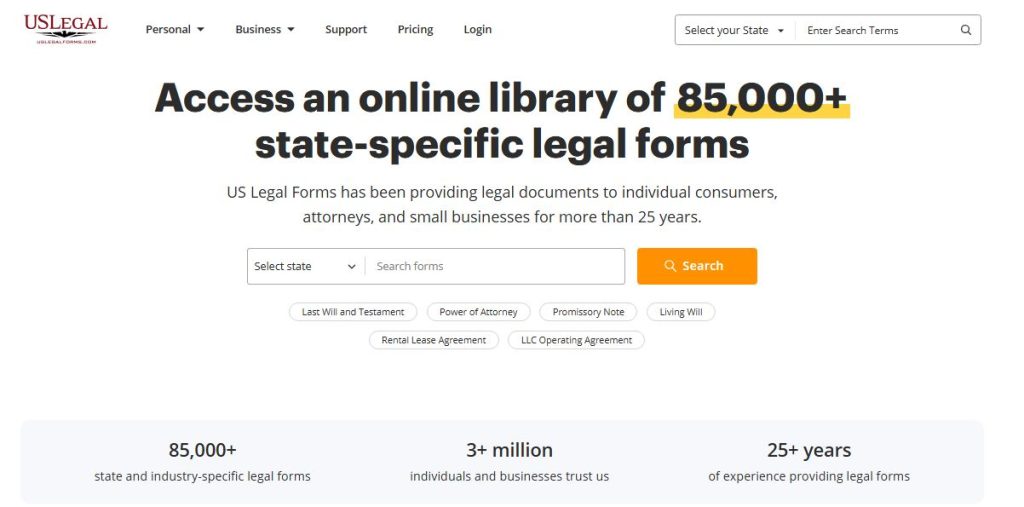
Here’s how straightforward the process is:
1. Select a freelance/independent contractor agreement template. Choose the template that matches your type of work — general freelance services, creative work, consulting, or development.
2. Customize the scope, payment terms, and timeline. Fill in your specific deliverables, rate, payment schedule, and deadlines so the contract reflects the actual project rather than generic placeholder language.
3. Add your state’s jurisdiction and any industry-specific clauses. Make sure the governing law section matches your location, and add clauses relevant to your field — like IP ownership terms for creative or development work, or confidentiality if you’ll have access to sensitive client information.
4. Download and send for e-signature. Export the finished contract and send it to your client to sign before any work begins — many freelancers pair this with an e-signature tool to keep the whole process digital and fast.
→ [Get your freelance contract template through US Legal Forms here]
Conclusion
A freelance contract isn’t paperwork overkill — it’s the single document that turns a vague verbal understanding into something you can actually rely on if a project goes off track. It protects your time, your payment, and your work, while giving clients the same clarity they need to trust you with their project.
Whether you’re taking on your first freelance client or your fiftieth, the same rule applies: get it in writing, get it signed, and do it before any work begins.
If you’re ready to put a solid contract in place today, US Legal Forms gives you attorney-drafted, customizable freelance contract templates — no lawyer’s fee, no starting from a blank page.
Save this before your next client call, and share it with any freelancer friends who are still working off handshake deals.
FAQ
Do I need a contract for a small freelance job?
Yes. Small projects are actually where scope creep and payment disputes happen most often, since there’s less incentive on either side to formalize expectations upfront. A short, simple contract still protects you.
What happens if a client won’t sign a contract?
Treat it as a warning sign. Clients who regularly work with freelancers expect a contract — refusal to sign one often points to bigger issues down the line, like reluctance to commit to payment terms or scope.
Can I use the same contract for every client?
You can reuse the same template, but you should customize the scope, payment terms, and any industry-specific clauses for each project to keep it accurate and enforceable.
What if a client refuses to pay after signing a contract?
A signed contract gives you a concrete basis to pursue payment — through a formal demand letter, small claims court, or, for larger amounts, legal action. Without one, you have far less recourse.
Is a verbal agreement legally binding for freelance work?
In some cases, yes, but it’s extremely difficult to prove the specific terms if a dispute arises. A written, signed contract removes that ambiguity entirely.