

Are you looking for Frase alternatives that can help you plan, write, and optimize content more efficiently? Frase is an impressive AI-powered content tool, but it’s not the perfect fit for everyone. Whether you find its pricing restrictive, its AI writing inconsistent, or its optimization insights limited, there are several strong competitors that offer similar — and in some cases, better — capabilities.
In this guide, we’ll explore ten of the best Frase alternatives. From advanced SEO content optimizers like Rankability and Page Optimizer Pro, to AI-assisted platforms such as Koala AI and Scalenut, each tool brings something unique to the table. You’ll learn what makes each option stand out, their key features, pros and cons, and which type of content creator or marketing team they’re best suited for.
Why Look for a Frase Alternative?
Frase has become a go-to platform for many marketers and writers thanks to its AI-assisted briefs, topic research, and optimization tools. However, as content teams grow and SEO needs evolve, certain pain points often push users to explore other options.
Here are some of the most common reasons people start looking for a Frase alternative:
1. Pricing that doesn’t scale well
Frase’s pricing can quickly add up, especially for teams managing multiple projects or client accounts. Many alternatives offer more generous word limits, shared workspaces, or pay-as-you-go options that better fit growing teams.
2. Limited AI writing control
While Frase’s AI writing feature is convenient, it can sometimes produce generic or repetitive output. Competing tools often provide more creative flexibility, deeper SERP-based insights, or tone customization that helps maintain brand voice.
3. Workflow and collaboration constraints
Frase’s interface can feel restrictive for multi-writer teams or agencies needing custom briefs and multi-level approvals. Tools like Outranking and Content Harmony, for example, offer smoother team collaboration and structured workflows.
4. Depth of SEO insights
Frase’s optimization scores are helpful but can feel surface-level compared to tools that dig deeper into entity analysis, NLP scoring, or competitor data. Platforms like Rankability or Page Optimizer Pro excel in this area, offering precision-level SEO recommendations.
5. Desire for better integrations
Some users look for tighter integrations with Google Docs, WordPress, or other SEO platforms. Alternatives like Semrush Writing Assistant and Surfer make this seamless.
In short, the decision to switch isn’t always about dissatisfaction — it’s often about finding a tool that better matches your workflow, budget, and long-term content goals.
Key Criteria for Comparing Frase Alternatives
Before choosing the right Frase alternative, it helps to know what truly matters when comparing tools. Each platform approaches content optimization a little differently — some focus heavily on SEO scoring, while others emphasize AI-assisted writing or workflow automation.
Here are the main factors worth evaluating:
1. Content Optimization Accuracy
Look for tools that go beyond basic keyword density. The best alternatives analyze entities, search intent, and topic relevance, giving you deeper insights into what actually ranks. Platforms like Rankability and MarketMuse are excellent examples.
2. AI Writing Quality
If you rely on AI to draft or assist with writing, pay attention to how natural and factually accurate the output is. Some tools, such as Koala AI and Scalenut, use real-time SERP data to generate more contextually relevant content.
3. SEO and Platform Integrations
Seamless connections with Google Docs, WordPress, or analytics platforms can save hours of manual work. Tools like Surfer and Semrush Writing Assistant stand out here, offering plug-ins and extensions for smooth optimization during writing.
4. Keyword Clustering and Topic Depth
Frase does basic keyword grouping, but advanced alternatives like Outranking or Content Harmony create full topic clusters, helping you build authority around related keywords and search intents.
5. Collaboration and Workflow Tools
If you manage a team, ensure your chosen platform supports multiple users, shared briefs, and version control. Collaboration-first tools make it easier to maintain consistency across large content projects.
6. Pricing and Scalability
Finally, weigh the cost versus features. A tool that fits your current budget but can’t scale with your content needs may lead to another switch later. Always look for flexible pricing or pay-per-usage models that align with your growth.
When comparing Frase alternatives, think beyond features — focus on how each tool complements your writing style, SEO strategy, and workflow. The best tool isn’t always the most advanced one, but the one that helps you create better content, faster.
Top 10 Frase Alternatives
If you’re ready to explore tools that can match or outperform Frase in content optimization, topic research, and AI-assisted writing, here are ten strong alternatives worth your attention. Each platform offers its own mix of strengths — from SEO precision to collaboration ease — depending on your goals and workflow.
Rankability
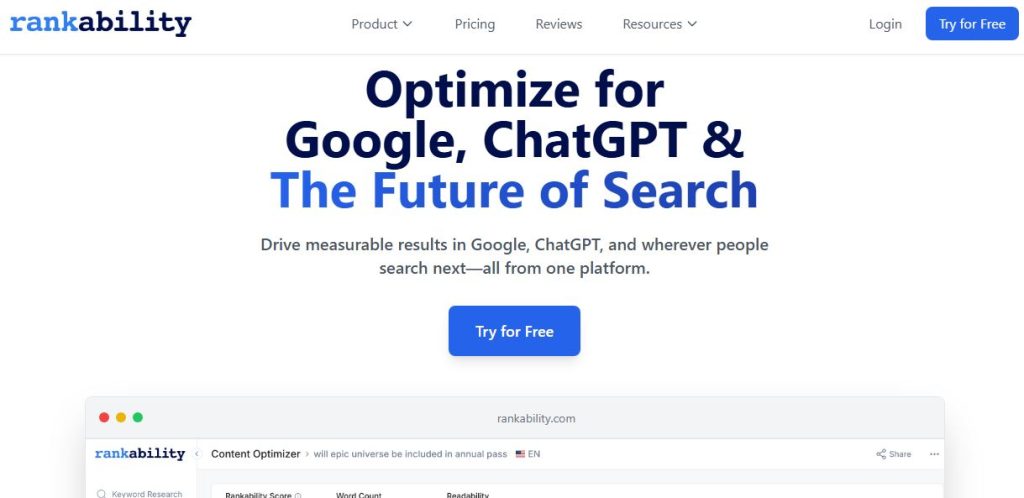
If you’re looking for a fresh, affordable alternative to Frase that actually feels like it was built for writers — Rankability deserves a spot on your radar. It’s a newer player in the SEO content optimization space, but it’s quickly earning attention for how it blends practical SEO insights with hands-on community support.
Rankability is designed to help content creators and SEO teams produce top-ranking articles without feeling overwhelmed by data. What sets it apart is its human-first approach — it’s not just another AI tool; it’s also a learning hub where users get access to “Mastermind Calls” and ongoing guidance from real SEO experts. This makes it especially appealing for writers who want to grow their SEO knowledge while improving their content.
Main Features
1. Keyword Research
Rankability helps uncover high-potential keywords with low competition and strong search intent. It analyzes live SERP data to highlight the topics and questions your audience actually cares about — not just what’s trending.
2. AI Content Briefs
Instead of manually building outlines, Rankability uses AI to generate detailed, SEO-friendly content briefs in minutes. These include must-cover subtopics, key terms, and structure suggestions to help you start writing with confidence.
3. Content Editor
The built-in editor provides real-time optimization feedback as you write. It scores your content based on keyword use, readability, and topical depth — similar to Clearscope or Frase, but with a simpler, more intuitive workflow.
4. Content Optimizer
Rankability can audit existing content and pinpoint missed opportunities. You’ll see which keywords to add, which headings to tweak, and where to expand coverage for better rankings.
5. Content Monitor
After publishing, the Content Monitor keeps an eye on your articles’ performance. It alerts you when pages start to lose traction or need a refresh — helping you maintain visibility over time.
6. Mastermind Calls
Here’s where Rankability truly stands out. Every user can join live coaching sessions hosted by real SEO professionals. These community calls cover strategies, case studies, and hands-on optimization tips — creating a built-in mentorship experience that few tools offer.
Pros
- Combines AI-driven insights with real human coaching
- Affordable compared to Clearscope, Frase, and Surfer
- Real-time optimization feedback that’s easy to understand
- Active community and continuous learning opportunities
- Perfect for writers who value simplicity and results
Cons
- Still new, so fewer integrations than older platforms
- Smaller keyword database compared to enterprise-level tools like MarketMuse
Best For
Freelancers, solo creators, and small marketing teams who want a smart, affordable alternative to Frase — with the added bonus of expert-led support and a growing community of SEO-minded writers.
Koala AI
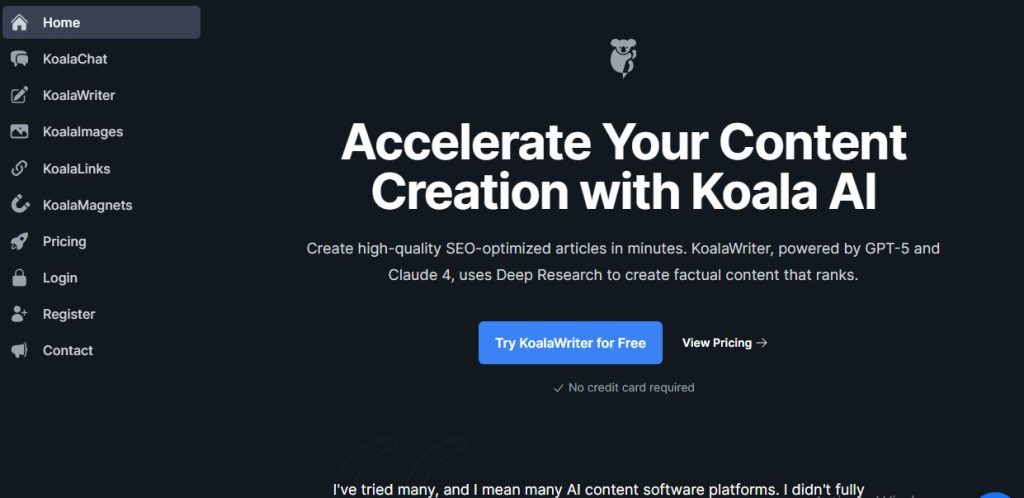
If you’re looking for a Frase alternative that blends speed, simplicity, and search accuracy, Koala AI is worth a serious look. It’s a newer-generation AI writing tool that pulls data directly from Google’s search results in real time — meaning every article it generates is built around what’s currently ranking, not outdated or generic data.
Koala AI has quickly become a favorite among bloggers and affiliate marketers because it delivers SEO-optimized content that’s ready to publish within minutes. It skips the unnecessary complexity and focuses on what matters most — writing high-quality, search-focused content that performs.
Main Features
1. Real-Time SERP Analysis
Unlike most AI writers that rely on static datasets, Koala AI scans live Google search results before generating content. This helps you capture relevant keywords, headings, and angles aligned with current SERP trends.
2. AI Blog Generation
With just a target keyword or topic, Koala AI can create long-form blog posts in minutes. It automatically structures the content with SEO-friendly headings, FAQs, and keyword placement.
3. Keyword Clustering
Koala AI groups related keywords to help you build topic authority and avoid cannibalization. It’s especially useful for blogs targeting multiple related queries.
4. Internal Linking Suggestions
The platform identifies linking opportunities between your existing posts, helping you strengthen site architecture and boost overall topical relevance.
5. AI Writer + Chat Mode
Koala also includes a conversational AI mode that lets you refine drafts, rewrite sections, or request new outlines on the fly — making it both a writer and editor in one place.
Pros
- Real-time SEO data ensures content stays relevant
- Fast and easy to use — no steep learning curve
- Great balance between quality and efficiency
- Affordable monthly plans for small teams and solo creators
Cons
- Limited formatting and content editing flexibility
- Lacks advanced brief customization found in tools like MarketMuse or Outranking
Best For
Bloggers, affiliate marketers, and small business owners who want to create SEO-optimized content quickly — without juggling multiple tools or learning complex workflows.
MarketMuse
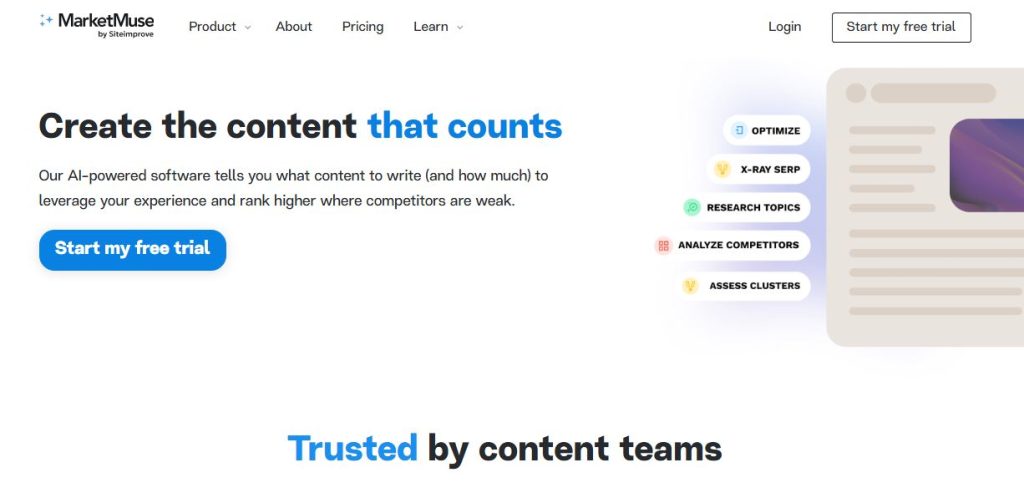
When it comes to deep, data-driven content strategy, MarketMuse remains one of the most respected tools in the SEO industry. It’s been around far longer than most AI content optimizers and has built a strong reputation for its advanced topic modeling, content scoring, and keyword gap analysis.
Unlike tools that focus primarily on content generation, MarketMuse is designed to help you plan and optimize content strategically — making sure every article supports your site’s topical authority and long-term SEO goals.
Main Features
1. Topic Modeling and Authority Scoring
MarketMuse evaluates how well your content covers a topic and measures your site’s overall authority in that niche. It identifies keyword and topic gaps that competitors are ranking for — giving you a clear roadmap for improving coverage.
2. AI-Powered Content Briefs
You can generate detailed briefs with suggested subtopics, related terms, and structure recommendations. These briefs help writers create content that’s both comprehensive and search-aligned.
3. Content Inventory and Audit Tools
MarketMuse scans your existing pages to highlight underperforming content and offers insights on how to refresh, merge, or expand articles for stronger rankings.
4. Competitive Content Analysis
By analyzing top-ranking pages, MarketMuse reveals what topics competitors cover — and more importantly, what they’re missing — allowing you to create content that fills those gaps.
5. Content Optimization
Once your draft is ready, MarketMuse scores it in real time based on keyword coverage, readability, and topic depth, so you can fine-tune it before publishing.
Pros
- In-depth topic research and coverage analysis
- Excellent for planning content clusters and long-term SEO growth
- Data-backed optimization and strategic insights
- Ideal for enterprise teams needing scalable solutions
Cons
- Premium pricing that may be out of reach for freelancers or small teams
- Interface can feel complex for beginners
- Slower data processing compared to lighter tools like Koala AI or Scalenut
Best For
Enterprise teams, agencies, and SEO strategists managing large content libraries who need advanced data and long-term topic planning — not just AI writing support.
Page Optimizer Pro (POP)
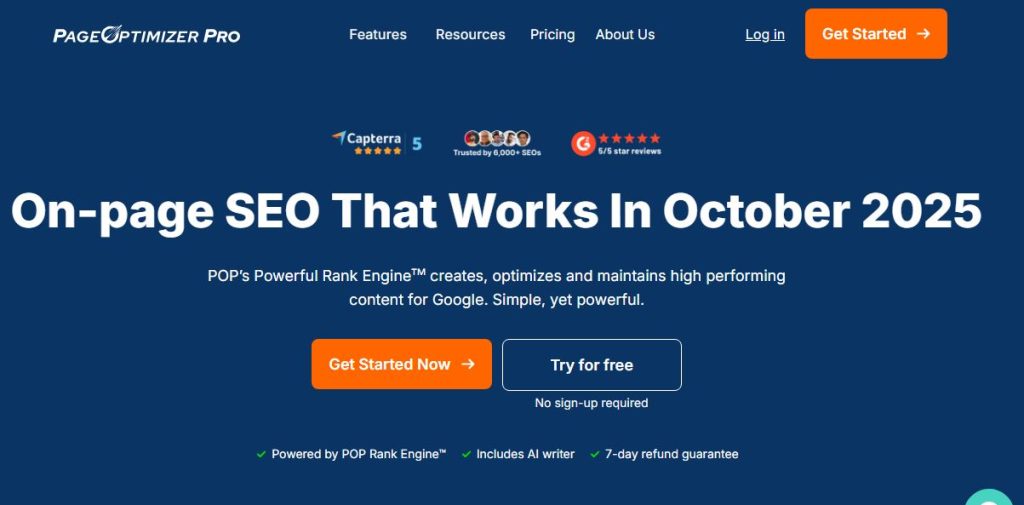
If you prefer a no-nonsense, data-driven approach to on-page SEO, Page Optimizer Pro (POP) is one of the most reliable Frase alternatives on the market. Created by SEO expert Kyle Roof, POP is built around proven mathematical formulas and real-world testing — not guesswork or generic AI suggestions.
Rather than focusing on AI writing, POP zeroes in on what Google’s top-ranking pages are actually doing right. It analyzes competitor data, keyword placement, and page structure to give you clear, actionable recommendations for improving your own content.
Main Features
1. On-Page SEO Scoring
POP uses TF-IDF and LSI analysis to evaluate how your content compares to competitors. It identifies which terms and phrases appear most often on top-ranking pages, then tells you how to adjust your content to compete.
2. Competitor Comparison
You can input competitor URLs, and POP will show exactly where your page falls short — whether it’s missing key topics, has too few headings, or lacks keyword density in specific sections.
3. Optimization Reports
POP generates detailed reports that break down what to change and why. You’ll see specific recommendations for title tags, headers, body content, and internal linking.
4. Content Editor Integration
The built-in editor lets you apply those recommendations in real time. As you adjust your content, your optimization score updates, making it easy to fine-tune before publishing.
5. Chrome Extension and API Access
For agencies and SEO pros, POP offers a Chrome extension and API integration for scaling audits across multiple pages and clients.
Pros
- Trusted by technical SEOs for its precision and proven methodology
- Transparent, data-backed recommendations
- Great for competitive audits and on-page adjustments
- Affordable pricing for solo SEOs and small teams
Cons
- Outdated interface compared to newer AI-based tools
- No AI writing or automatic brief generation
- Not ideal for complete beginners
Best For
Technical SEOs, agencies, and advanced marketers who want complete control over their on-page optimization — without relying on automated AI content generation.
Surfer
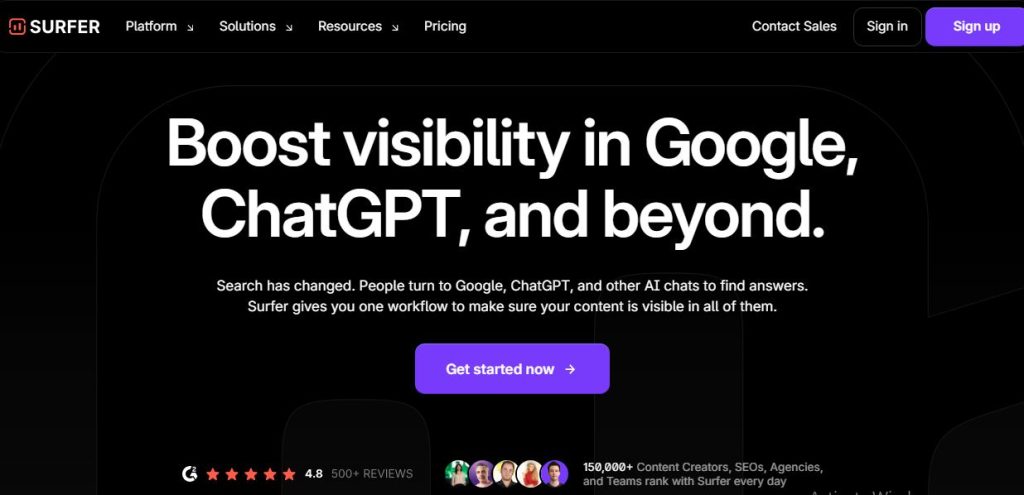
If you’ve spent any time researching SEO content tools, Surfer has probably come up more than once — and for good reason. It’s one of the most established and widely used SEO optimization platforms, known for combining ease of use with robust data analysis.
Surfer helps writers and marketers create content that’s not just optimized for search engines, but also aligned with real user intent. Its clean interface, deep integrations, and real-time scoring system make it a popular choice for teams that want precision and speed in one place.
Main Features
1. Content Editor
Surfer’s Content Editor provides real-time optimization feedback as you write. It suggests target keywords, content length, heading structure, and keyword frequency based on data from top-ranking pages.
2. SERP Analyzer
This feature breaks down competitor pages, analyzing everything from word count to backlink profiles and keyword usage. It’s a goldmine for understanding what Google values for specific topics.
3. Keyword Research & Clustering
Surfer’s keyword research tool identifies related search queries and automatically groups them into clusters, helping you build out topical authority.
4. AI Outline Builder
Surfer can generate detailed outlines and suggested headings for your articles, ensuring your structure matches what’s performing best on search.
5. Integrations
It integrates seamlessly with Google Docs, WordPress, and AI writers like Jasper, allowing you to optimize directly inside your preferred writing environment.
Pros
- Real-time optimization feedback that’s highly accurate
- Easy-to-use interface and clean design
- Excellent integrations for smooth workflows
- Reliable keyword clustering and SERP insights
- Strong community and consistent product updates
Cons
- Can get expensive with multiple seats or advanced features
- Some data features (like backlink analysis) are limited compared to full SEO suites
- May feel overpowered for beginners who only need light optimization
Best For
Freelancers, agencies, and growing content teams that want an all-in-one solution for content writing, SEO optimization, and keyword strategy — all without leaving their favorite writing tools.
Content Harmony
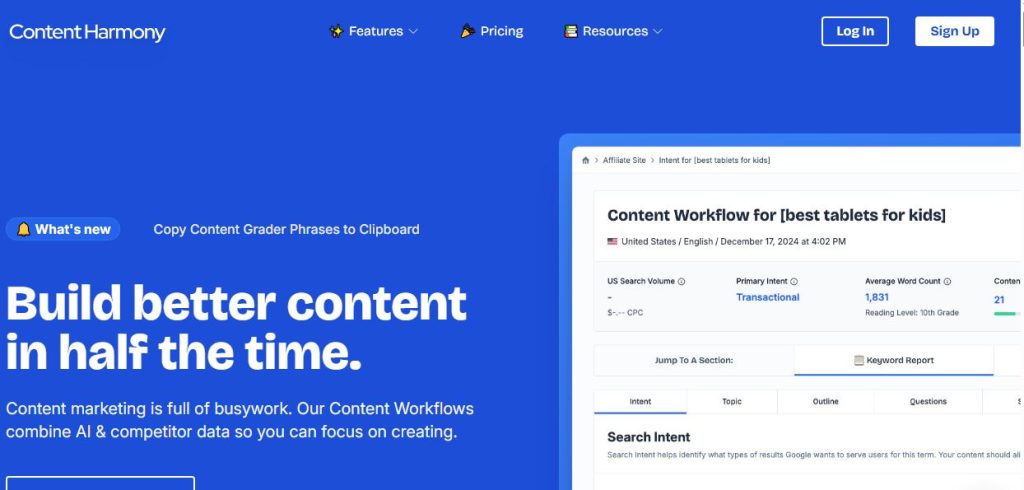
If your team spends a lot of time planning, outlining, and coordinating content before writing begins, Content Harmony is one of the most organized and workflow-friendly Frase alternatives available. Instead of focusing on AI writing, it helps you build better content briefs and ensure every article aligns perfectly with both SEO strategy and editorial intent.
Where Frase automates topic research, Content Harmony shines in content planning — giving marketers clarity on what to write, why to write it, and how to make it rank. It’s built for teams that care about structure, collaboration, and strategy as much as the final draft itself.
Main Features
1. Keyword & Intent Analysis
Content Harmony helps you understand not just which keywords to target, but the intent behind them — whether informational, transactional, or navigational. This ensures you’re creating content that meets searcher expectations.
2. Automated Brief Creation
With a few clicks, you can generate detailed content briefs that include title ideas, key questions, subtopics, and sources. These briefs make it easy for writers to stay aligned with SEO objectives from the start.
3. Content Scoring
Each draft receives a content score based on keyword coverage, structure, and readability. The score updates in real time as you refine your copy.
4. Workflow Management
Content Harmony was designed with teams in mind. You can assign briefs, track progress, and collaborate seamlessly — reducing back-and-forth between strategists and writers.
5. Content Templates & Reports
The platform offers pre-built templates for various content types (blog posts, landing pages, product pages) and exports detailed reports that summarize optimization opportunities.
Pros
- Excellent for collaboration between strategists, editors, and writers
- Produces highly structured, SEO-ready briefs
- Focuses on intent — not just keywords
- Clear workflow tools for managing large teams
Cons
- Lacks AI writing or automated content generation
- Pricing can be high for freelancers or small teams
- Interface may feel process-heavy for solo writers
Best For
Content managers, editorial teams, and agencies that want to streamline their brief creation process, ensure consistent SEO quality, and manage content workflows efficiently from one dashboard.
Semrush Writing Assistant

For marketers who already rely on Semrush for keyword research and competitive analysis, the Semrush Writing Assistant is a natural extension of that workflow. It’s designed to help you optimize your content directly where you write — whether that’s in Google Docs, WordPress, or inside the Semrush dashboard.
Unlike some tools that try to do everything, Semrush Writing Assistant focuses on enhancing what you’ve already written. It combines readability, tone, and SEO scoring in real time, helping you refine your content before it goes live.
Main Features
1. SEO Optimization Score
The Writing Assistant analyzes your draft and assigns an SEO score based on keyword placement, readability, and structure. It also checks whether your target keywords appear naturally throughout the text.
2. Readability and Tone of Voice Checks
It evaluates your content for sentence complexity, paragraph flow, and tone consistency — ensuring your message feels clear and on-brand.
3. Originality and Plagiarism Checker
Using Semrush’s database, the tool scans for duplicate content to help you maintain originality and avoid accidental plagiarism.
4. Keyword Recommendations
The Assistant suggests related keywords to improve topical depth and keyword coverage, helping you align your content with real search intent.
5. Integration with Google Docs and WordPress
You can access all these features inside your writing environment, making optimization a natural part of your content creation process rather than an extra step.
Pros
- Seamless integration with Semrush’s SEO ecosystem
- Simple and intuitive for quick optimization checks
- Built-in plagiarism detection for content quality assurance
- Great for maintaining tone consistency across multiple authors
Cons
- Requires an active Semrush subscription
- Limited for advanced content planning or AI writing
- Not ideal for building detailed SEO briefs or outlines
Best For
Writers, editors, and marketing teams who already use Semrush for SEO research and want an integrated way to polish, optimize, and publish content directly from their favorite writing tools.
Scalenut
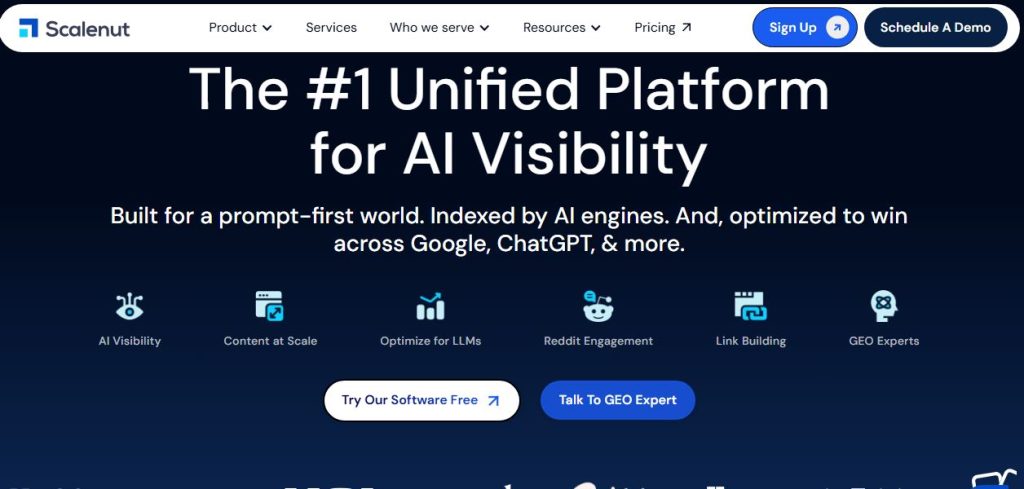
If you’re after an affordable, all-in-one content and SEO platform that can rival Frase in both usability and depth, Scalenut is a standout choice. It brings together AI writing, keyword research, and content optimization in a single dashboard — making it ideal for teams that want both strategy and execution in one place.
Scalenut has gained popularity for its ability to simplify complex SEO workflows. From generating topic clusters to writing long-form content through its AI engine, it’s built to help you create optimized content faster, without losing accuracy or structure.
Main Features
1. Cruise Mode (AI Writing)
Scalenut’s Cruise Mode allows you to create long-form content with minimal input. You provide a topic or keyword, and it generates outlines, headings, and full drafts optimized for search.
2. Keyword Planner & Topic Clustering
This feature groups keywords by intent and relevance, helping you plan topic clusters that build authority and reduce content overlap — something Frase users will find familiar, but more automated here.
3. SERP Analyzer
Scalenut breaks down top-ranking pages to show content length, heading patterns, and keyword density. These insights guide your structure and help identify ranking opportunities.
4. Content Optimizer
The built-in optimizer scores your content in real time, suggesting missing topics, relevant terms, and readability improvements — all based on NLP and competitor analysis.
5. AI Templates & Workflows
For faster content creation, Scalenut offers pre-built templates for blogs, product descriptions, ad copy, and social content — helping you maintain brand consistency across multiple channels.
Pros
- Strong balance between affordability and functionality
- Easy to use with minimal learning curve
- Excellent for end-to-end SEO and content creation
- Useful AI templates for various content types
- Solid competitor and topic analysis tools
Cons
- AI-generated text can sometimes require fact-checking
- Limited integrations compared to more mature platforms like Surfer or Semrush
- Some features (like Cruise Mode) can feel repetitive for advanced users
Best For
Content marketers, small businesses, and growing agencies that need a cost-effective Frase alternative capable of handling keyword research, topic clustering, and AI writing — all within a single tool.
Dashword
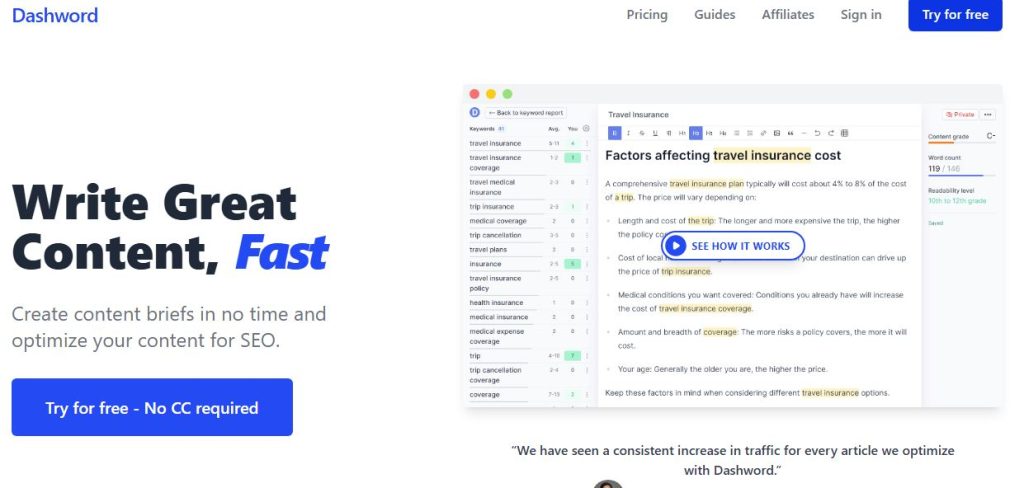
If you’re looking for a lightweight, no-fuss content optimization tool that helps you improve rankings without the steep learning curve, Dashword is a solid Frase alternative. It’s designed for writers and small teams who want clear, actionable insights — not overwhelming dashboards or complex reports.
Dashword focuses on simplicity and speed. It strips away unnecessary features and delivers what most creators really need: a clean interface, keyword suggestions, and quick feedback on how to make content more search-friendly.
Main Features
1. Content Optimization
Dashword analyzes your content against top-ranking pages and gives you a score based on keyword coverage, readability, and topic completeness. You can see in real time how your edits affect the overall SEO quality of your post.
2. Keyword Recommendations
The platform suggests related keywords and topics to include, helping you cover the right subtopics and increase your chances of ranking for multiple queries.
3. Outline Builder
Dashword can auto-generate outlines based on competitor content, making it easier to plan articles that follow proven ranking structures.
4. Competitor Insights
You can view side-by-side comparisons of your content versus top-ranking competitors to quickly identify content gaps or missing sections.
5. Collaboration Features
With shared workspaces and commenting, small teams can review and edit articles collaboratively — a nice touch for teams managing multiple client projects.
Pros
- Clean, easy-to-use interface with minimal setup
- Fast and accurate content scoring
- Affordable pricing for individual creators or small teams
- Ideal for quick optimizations without heavy data overload
Cons
- Limited integrations and automation options
- No built-in AI writing or keyword clustering
- Lacks deep SERP analysis compared to more advanced tools
Best For
Solo bloggers, freelance writers, and small content teams who want a simple, affordable way to improve on-page SEO and content quality — without investing in a larger, more complex platform.
Outranking
If you’re looking for a powerful, AI-driven platform that goes beyond content optimization and into full workflow automation, Outranking is one of the most advanced Frase alternatives available today. It combines SEO strategy, AI writing, and performance tracking in a single environment — helping teams create, optimize, and maintain high-ranking content at scale.
What sets Outranking apart is its structured approach. Instead of simply suggesting keywords or optimization scores, it guides you step-by-step through the entire content creation process — from ideation and brief generation to final optimization and internal linking.
Main Features
1. Step-by-Step AI Content Creation
Outranking’s guided workflow walks you through topic research, outline creation, and AI-assisted drafting. Each stage is informed by live SERP data and NLP analysis, ensuring your content is both relevant and competitive.
2. Automated Content Briefs
The platform generates comprehensive content briefs with headings, related entities, search intent, and competitor comparisons. These briefs make it easy for writers to start with clarity and confidence.
3. On-Page Optimization
As you write, Outranking provides a real-time SEO score and recommends ways to improve coverage, readability, and structure. It also highlights missing entities and keyword opportunities.
4. Internal Linking Automation
Outranking automatically scans your site to suggest internal linking opportunities, helping improve topical authority and site architecture — a feature few competitors offer natively.
5. Content Performance Tracking
After publication, Outranking monitors how your content performs over time and alerts you when it starts to lose rankings or engagement, making it easier to keep content fresh and competitive.
Pros
- Highly structured, data-backed content workflow
- Excellent brief generation and optimization tools
- Built-in internal linking and content tracking
- Ideal for teams producing large volumes of SEO content
- Accurate NLP-based topic and entity analysis
Cons
- Interface can feel complex for first-time users
- Premium pricing compared to lighter tools like Dashword or Koala AI
- Some AI-generated content may require manual refinement
Best For
Agencies, enterprise marketing teams, and SEO strategists managing large-scale content operations who want a full-featured Frase alternative capable of handling every stage of the content lifecycle — from planning to performance tracking.
Comparison Table — Frase vs. Top Alternatives
To help you see how each tool stacks up, here’s a quick side-by-side comparison of Frase and the top alternatives covered in this guide. This overview highlights their primary focus, standout features, pricing range, and ideal users so you can quickly find the platform that best fits your goals.
| Tool | Primary Focus | Key Strengths | Best For |
|---|---|---|---|
| Frase | AI content briefs and optimization | Fast content briefing, topic research, NLP-based optimization | Solo creators, content teams wanting simplicity |
| Rankability | SEO optimization with human coaching | Real-time feedback, expert-led “Mastermind” support, keyword insights | Freelancers and small teams who want guidance and results |
| Koala AI | Real-time AI blog generation | Uses live SERP data, fast and affordable, strong keyword coverage | Bloggers and affiliate marketers who publish frequently |
| MarketMuse | Topic authority and strategic content planning | Deep topic modeling, content inventory audits | Agencies and enterprises managing large content portfolios |
| Page Optimizer Pro (POP) | Data-driven on-page SEO | Precise TF-IDF scoring, competitor comparison | Technical SEOs and advanced practitioners |
| Surfer | All-in-one SEO writing and optimization | Powerful Content Editor, keyword clustering, wide integrations | Agencies, freelancers, and growth-focused teams |
| Content Harmony | Brief creation and workflow management | Intent-based keyword analysis, structured team collaboration | Content strategists and editorial teams |
| Semrush Writing Assistant | SEO and readability optimization | Works in Google Docs/WordPress, tone and originality checks | Writers already using Semrush for SEO research |
| Scalenut | AI writing + SEO suite | Cruise Mode for long-form content, keyword clustering | Small businesses and marketers needing an affordable all-rounder |
| Dashword | Simple, fast content optimization | Easy interface, real-time scoring, quick keyword insights | Solo bloggers or small teams |
| Outranking | Full AI workflow automation | Guided brief-to-publish process, internal linking, tracking | Agencies and enterprise SEO teams |
How to Choose the Right Frase Alternative
With so many AI and SEO tools on the market, choosing the right Frase alternative really comes down to your goals, workflow, and budget. Each platform we’ve covered excels in specific areas — from automation and collaboration to deep optimization and education. Here’s how to narrow it down.
1. Define Your Core Needs
Start by asking what you actually need help with.
- If you struggle with keyword research and strategy, tools like MarketMuse or Content Harmony will give you a strategic edge.
- If you want fast AI-assisted writing, Koala AI or Scalenut will get you publishing quickly.
- If your focus is technical SEO precision, Page Optimizer Pro or Surfer might be your best fit.
2. Consider Your Team Size and Workflow
Solo creators and freelancers usually prefer lightweight, affordable tools like Rankability or Dashword — easy to learn, fast to use, and effective.
For larger editorial teams, Outranking or Content Harmony provide better collaboration, workflow management, and scalability.
3. Balance Automation with Control
AI tools can save time, but you still need oversight to ensure your content stays accurate and authentic.
- Tools like Scalenut and Koala AI automate the writing process.
- Platforms like Surfer, MarketMuse, and Outranking give you deeper control and data-backed insights.
Choose the balance that fits your team’s expertise and the complexity of your content strategy.
4. Evaluate Ongoing Support and Community
Some tools go beyond software and offer mentorship, live sessions, or learning communities.
Rankability, for instance, stands out with its “Mastermind Calls” — a rare human-first approach that helps writers learn and grow.
If you value guidance and community, that’s worth factoring into your decision.
5. Think Long-Term
Don’t just pick a tool that fits your next project — choose one that aligns with where your content strategy is headed.
If you plan to scale, look for:
- Reliable integrations (e.g., WordPress, Google Docs, CMS tools)
- Content tracking and performance analytics
- Team collaboration features
That way, your platform can grow with you rather than hold you back.
Final Thoughts
Choosing the right Frase alternative isn’t just about finding another content tool — it’s about finding a system that fits your way of creating, optimizing, and growing. Whether you’re a solo writer trying to rank your next blog post or part of a team managing dozens of pages, the right platform can completely change how you approach SEO and content creation.
Tools like Surfer, Outranking, and MarketMuse deliver serious power for large-scale strategies. But if you’re looking for something more approachable — a tool that’s built for writers first and packed with real human guidance — Rankability is where you’ll want to start.
It’s affordable, community-driven, and refreshingly practical. You’ll get AI-powered optimization, keyword insights, and — most importantly — access to live Mastermind calls with real SEO professionals who actually teach you how to grow.
So before diving into another overly complicated or expensive SEO tool, give Rankability a try. It’s the kind of platform that doesn’t just improve your content — it helps you become a smarter, more confident creator every time you write.
Ready to Level Up Your Content?
If you’re serious about writing content that ranks — without getting buried in data or paying enterprise prices — it’s time to experience Rankability for yourself.
Join the growing community of writers and marketers who are using its AI-driven tools and live SEO coaching to consistently land top positions on Google.
👉 Start your free trial of Rankability today and see how much easier content optimization can be when you combine smart AI with real human guidance.